
nedelja, 31. avgust 2014


sreda, 27. avgust 2014
Middle East movie night: Wadjda

Wadjda je 10-letno dekle, ki z mamo živi v konzervativnem svetu Savdske Arabije, natančneje v predmestju glavnega mesta Riyadha. Oče je pogosto službeno odsoten, hkrati pa razmišlja o svoji drugi ženi, ki bi mu rodila sina, tega pa nikakor ne more sprejeti njegova prva žena, Wadjdina mama. Wadjda je svobodomiselna deklica, obuta hodi v All Starke, v šoli pa jo znova in znova opozarjajo, da si glavo pokrije v hijabom.
Med igro z Abdullahom, fantom iz soseske, v trgovini opazi čudovito zeleno kolo. Vse bi naredila za to, da bi ga lahko dobila, tekmovala z njim in premagala Abdullaha. Mama ji ne dovoli imeti kolesa saj se boji odziva družbe, katera meni, da so kolesa nevarna za dekleta, saj bi lahko povročilo, da Wadjda nekoč ne bi mogla imeti otrok. Zato se odloči kupiti kolo s svojim denarjem. Do njega bi lahko prišla tako, da osvoji glavno denarno nagrado z recitacijo Korana v šoli.
Film je osvojil veliko filmskih nagrad po celem svetu in bil v celoti posnet v Savdski Arabiji, državi, kjer kinematografi še vedno niso dovoljeni. Režisirala ga je prva ženska režiserka Savdske Arabije, Haifaa al-Mansour. S filmom je želela prikazati delček življenja ter odraščanja mladih deklet v tako konzervativni državi. Hkrati pa film prikazuje tudi problem mame, ki je odvisna od šoferja, da jo pripelje v službo, saj ženskam ni dovoljeno voziti avtomobile ter hkrati prepričuje svojega moža naj si ne najde druge žene.
Od leta 2013 naprej je ženskam v Savdski Arabiji dovoljeno voziti kolesa, toda samo na omejenih, rekreacijskih območjih, spremljati jih mora moški sorodnik, oblečene pa morajo biti v abayo. Ženske koles ne smejo uporabljati za transportne namene temveč "samo za rekreacijo". S tem so naredili korak naprej za ženske pravice v državi, kjer je interpretacija islama ultrakonzervativna.
Film je nastajal celih 5 let. Večino tega časa pa je režiserka vložila v iskanje finančne pomoči ter dovoljenja za snemanje filma, saj je zaradi pristnosti želela film posneti v Savdski Arabiji.
Wadjda is a 10-years-old girl who lives with his mother in the conservative world of Saudi Arabia, in the suburbs of the capital city Riyadh. The father is often absent because of work and at the same time thinking about his second wife which would born him a son. This fact can not be accepted by his first wife, Wadjda's mother. Wadjda is a free spirit girl, wearing All Star shoes and in school being constantly reminded to cover her head with hijab.
During playing on the street with Abdullah, a guy from the neighborhood, she sees a beautiful green bike in the store. She would do anything to get this bike, and beat Abdullah in bike race. Mother does not allow her to have a bike because she is afraid of the response of the society which believes that bikes are dangerous and unacceptable for girls. Also she believes this could be a cause that Wadjda could not have children. Therefore Wadjda decides to buy a bike with her own money, which she received by being the best reciter of the Quran in school.
The movie has won many awards worldwide and was shot entirely in Saudi Arabia, a country where cinemas are still not permitted. It was directed by the first female director of Saudi Arabia, Haifaa al-Mansour. With her movie she wants to demonstrate a situations and conditions of young girls adolescence and growing up in this conservative environment. At the same time the film also shows the problem of mother who is dependant on the driver to bring her to work, since women are not allowed to drive in Saudi Arabia. The movie also shows difficulties of Wadjda's mother accepting husband's decision to marry second wife.
From 2013 onwards women in Saudi Arabia are allowed to ride bikes but only in limited, recreational areas, accompanied by a male relative and they must be dressed in abaya. Women may not used bikes for transportation purposes but "only for recreation." This is a step forward for women's rights in a country where they have ultra-conservative interpretation of Islam.
They were working on this film for the whole 5 years. Director spent most of the time trying to find financial funds and getting filming permissions, since she insisted on authenticity and filming the whole movie in Saudi Arabia.
* * * * * * * * * * * * * * * * * * * * *
During playing on the street with Abdullah, a guy from the neighborhood, she sees a beautiful green bike in the store. She would do anything to get this bike, and beat Abdullah in bike race. Mother does not allow her to have a bike because she is afraid of the response of the society which believes that bikes are dangerous and unacceptable for girls. Also she believes this could be a cause that Wadjda could not have children. Therefore Wadjda decides to buy a bike with her own money, which she received by being the best reciter of the Quran in school.
The movie has won many awards worldwide and was shot entirely in Saudi Arabia, a country where cinemas are still not permitted. It was directed by the first female director of Saudi Arabia, Haifaa al-Mansour. With her movie she wants to demonstrate a situations and conditions of young girls adolescence and growing up in this conservative environment. At the same time the film also shows the problem of mother who is dependant on the driver to bring her to work, since women are not allowed to drive in Saudi Arabia. The movie also shows difficulties of Wadjda's mother accepting husband's decision to marry second wife.
From 2013 onwards women in Saudi Arabia are allowed to ride bikes but only in limited, recreational areas, accompanied by a male relative and they must be dressed in abaya. Women may not used bikes for transportation purposes but "only for recreation." This is a step forward for women's rights in a country where they have ultra-conservative interpretation of Islam.
They were working on this film for the whole 5 years. Director spent most of the time trying to find financial funds and getting filming permissions, since she insisted on authenticity and filming the whole movie in Saudi Arabia.
ponedeljek, 25. avgust 2014
From the earth to the sky
Najvišjo stavbo na svetu - Burj Khalifo, so poimenovali po predsedniku ZAE in voditelju Abu Dhabija, šejku Khalifa bin Zayed Al Nahyanu. Po govoricah sodeč je poimenovanje stavbe povezano s posojo 20 miljard AED Abu Dhabija Dubaju, da bi rešili emirat iz dolgov. Kakorkoli... stavbo, ki je visoka neverjetnih 828 m, so odprli 4. januarja 2010. Nekaj več kot 13.000 delavcev je trdo garalo dneve in noči dolgih 6 let.
Obiskovalce, ki si želijo stavbo pogledati iz skoraj samega vrha povzpnejo v 124. nadstropje oz. na 442 m, kar je v bistvu samo polovička stavbe, ampak brez skrbi, kljub temu bo razgled čudovit.
Priporočava, da karte rezervirate preko spleta.


{Burj Khalifo sva obiskala skupaj z Juretovim bratom Rokom}.
{We visited Burj Khalifa with Jure's "little" brother Rok}.

* * * * * * * * * * * * * * * * * * * * *
The highest building in the world - Burj Khalifa, was named after the President of the UAE and ruler of Abu Dhabi, Sheikh Khalifa bin Zayed Al Nahyan. According to rumors the naming of the building is associated with lending 20 billion AED from Abu Dhabi to Dubai to solve the emirate out of debt. Anyway ... the building, which is a 828 meters high, was opened on 4 January 2010. More than 13,000 workers worked day and night for about 6 years to finish the job.
We recommend that you made tickets reservation online.
Japanese mochi
Edo café je pravi naslov za tiste, ki obožujete azijske sladice. Ponujajo mochi, tradicionalno japonsko sladico v dveh različicah: mochi cream ali mochi ice cream. Izbirate lahko med 20imi okusi, z malo kalorijami in čudovitimi okusi.
Priporočava: mochi ice cream ;)
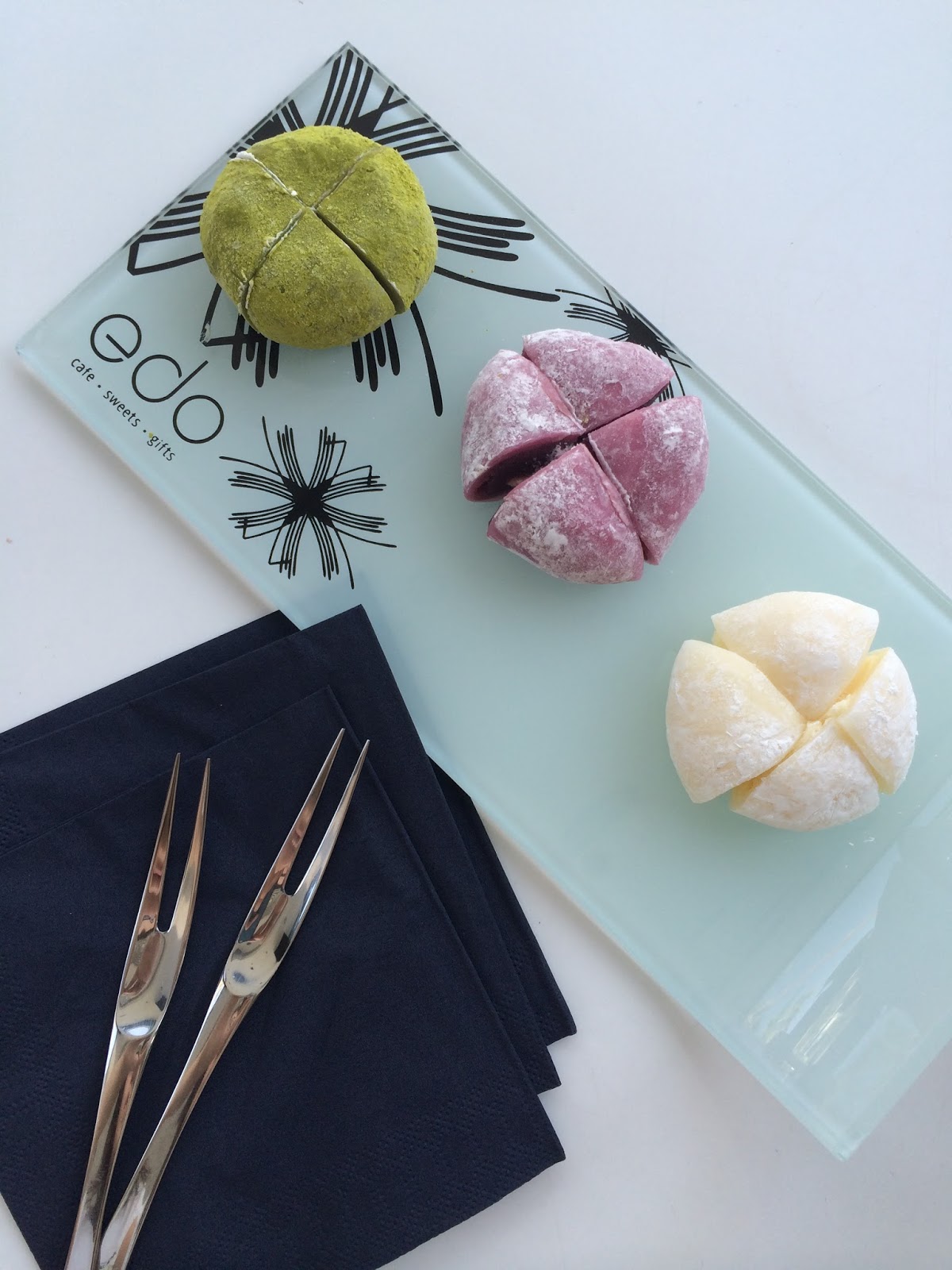
{Mochi cream: green tea, mix berry, mango.}

{Mochi ice cream: mango, green tea, strawberry, tiramisu.}
Cene niso ravno prijazne denarnici. Za 1 mochi cream boste odšteli 12 AED (2,5€) in za 1 mochi ice cream 15 AED (3€).
* * * * * * * * * * * * * * * * * * * * *
Edo café is the place for those who love Asian desserts. They offer mochi, a traditional Japanese dessert in two versions: mochi cream and mochi ice cream. You can choose between 20 flavors, with a low calories and delicious flavors.
We recommend: mochi ice cream ;)
Prices are not wallet friendly. 1 mochi cream is 12 AED (2,5 €) and 1 mochi ice cream is 15 AED (3 €).
nedelja, 3. avgust 2014

nedelja, 27. julij 2014
Ramadan is here
Prvič po letu 1980 se je Ramadan letos začel 29. julija in bo trajal cel mesec. V tem času se muslimani postijo od sončnega vzhoda do zahoda, pri čemer se vzdržijo vseh slabih navad. Datum začetka ramadana se spreminja letno, glede na postavitev mlaja. Začetek in konec ramadana pa se razglasi dan prej.
V tem času je potrebno paziti, da imamo pokrita ramena, kolena, srednji del telesa med prsmi in pasom (dekleta, moderni crop topi v tem mesecu odpadejo) ter prsa. Velja tako za ženske kot za moške.
Muslimanom voščimo »Ramadan Kareem«, pri čemer »kareem« pomeni radodaren ali blagoslovljen, torej: blagoslovljen ramadan.
Dobrodelnost v tem času ne pozna meja. Vsi zabojniki, kjer zbirajo oblačila in obutev so napolnjeni in hkrati tudi škatle v katerih zbirajo denar.
V znak spoštovanja glasbo poslušamo potiho, na javnih prostorih ne jemo, pijemo, žvečimo žvečilnega gumija ali kadimo. Vse to v tem času velja kot žaljivo in kaznivo, za kar lahko prejmemo globo ali opomin policije. Če želimo jesti ali piti v dnevnih urah je to potrebno storiti v zaprtih prostorih ali v za to določenih zagrnjenih javnih prostorih.
V tem času se tudi ne spuščamo v konflikte ali preklinjamo, saj je ramadan mesec miru in spokojnosti.
Skoraj vse restavracije so čez dan zaprte, kar pomeni, da se lahko na večerjo odpraviš šele po 19. uri ko se konča postenje. Da vem kdaj točno nastopi konec postenja uporabljam app Ramadan Times.

V času Iftarja (»prekinitev postenja«; prvi obrok s katerim muslimani prekinejo postenje takoj po sončnem zahodu) je v restavracijah potrebno rezervirati mizo. Tradicionalno Iftar začnejo z datlji, suhimi marelicami in kozarcem zelo sladkega soka, čemur sledijo veliki obroki v krogu svojih družin in prijateljev.
Pred sončnim vzhodom imajo obrok, ki ga imenujejo Suhoor.
Po 29ih ali 30ih dneh od začetka ramadana ter postavitve mlaja nastopi Eid al-Fitr, ki označuje konec ramadana.
Postenje ni priporočljivo za bolne ljudi, nosečnice ali otroke, ki še niso v puberteti. Za njih veljajo enaka pravila kot za ostale ljudi, ki se ne postijo. Vendar pa v mnogih družinah otroci sodelujejo pri postenju.

* * * * * * * * * * * * * * * * * * * * *
The first time since 1980 this year Ramadan began on 29 July and will last as usual for a one month. During this time Muslims are fasting from sunrise to sunset. They are abstaining from all negative behaviours. Starting dates of Ramadan vary annually according to the new moon. The beginning and end of Ramadan is declared the day before.
In the meantime make sure that you have covered shoulders, elbows, middle part of the body between the chest and waist (girls, do not wear modern crop tops during this month), and chest. Applies to both women and men.
During this time greetings to Muslims with "Ramadan Kareem", where "kareem" means generous and blessed, and what the total means that we wish them a blessed Ramadan.
Charity at that time knows no bounds. All containers which gather clothes are filled to the top and also boxes where they gather money.
As a sign of respect we have to listen music quietly, not eat, drink, chew gum or smoke in public places. All of this at this time is regarded as offensive and you can receive a fine or a reprimand from the police. If you want to eat or drink during daylight hours this must be done indoors or in designated public places.
During this time does not descend into conflict or swearing because Ramadan is a month of peace and tranquility.
Almost all of the restaurants are closed during the day, which means that you can go on a dinner only after 7 PM. Before that prior booking is required because all the restaurants are fully booked during iftar. Iftar literally means "to break the fast" and represents the first meal after sunset. Traditionally they start Iftar with dates, dried apricots and a glass of very sweet juice, followed by large meals with family and friends.
Before sunrise they have meal named Suhoor.
After 29 or 30 days from the start of Ramadan and upon the sighting of the new moon Eid al-Fitr signals is the end of Ramadan.
Fasting is not recommended for sick people, pregnant women, or children who are not yet in puberty. There are the same rules for them like for the other people who are also not fasting. However, in many families children also participating in the fasting.
nedelja, 20. julij 2014

Naročite se na:
Objave (Atom)